Field notes from a solo traveler
Traveling shifts my perspective and brings my attention back to the present moment.
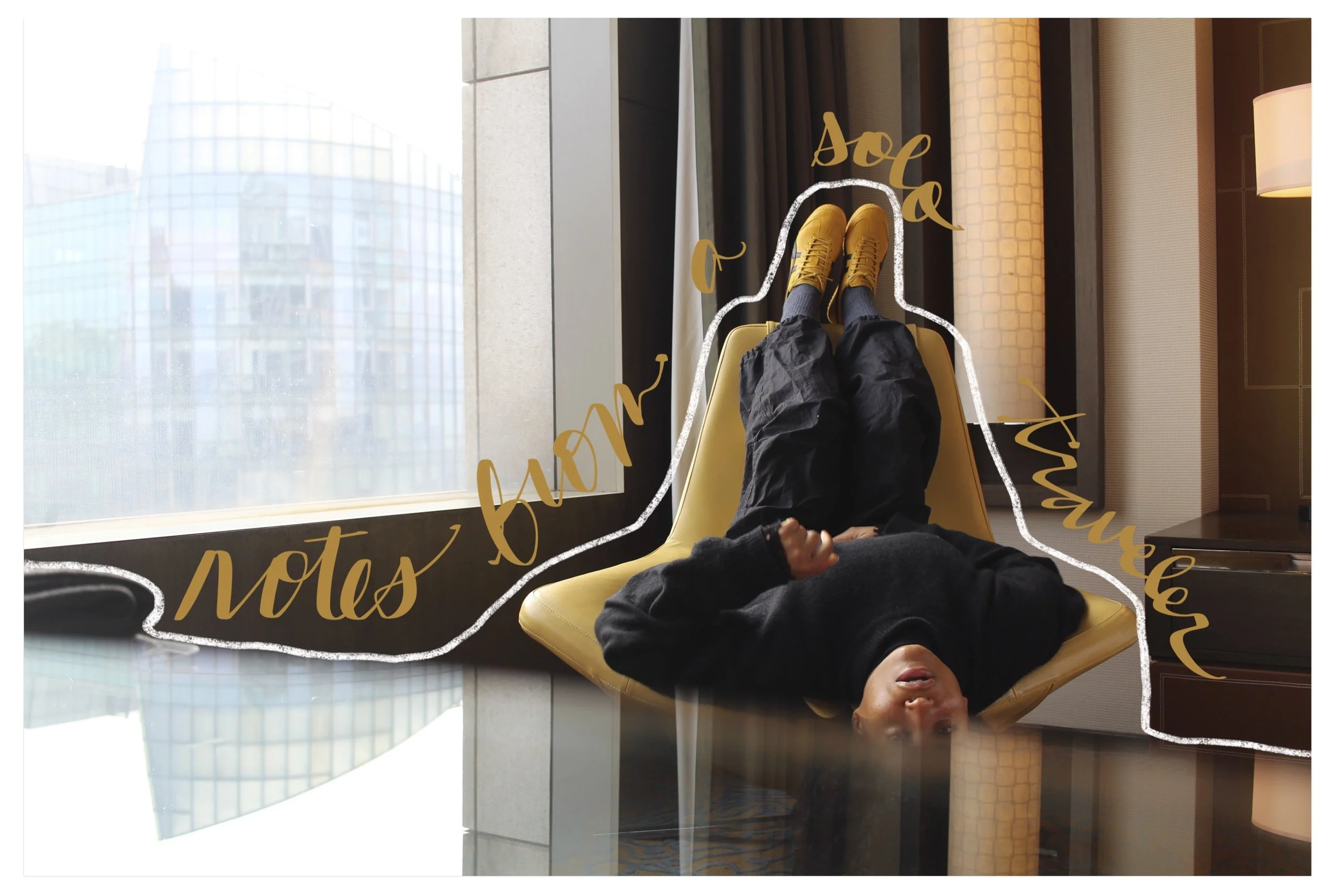
Travel creates distance to contextualize everything
I intentionally use travel as a form of active processing. I find that when I am at the epicenter of my responsibilities and work—everything can feel too close. I can’t objectively observe what is happening. This can lead to being reactive instead of proactive. It is when I travel and step away from my environment, that I can begin understand better.
This processing looks like time to think during transit, taking in new views, and focusing my attention elsewhere. Practically, I am not thinking about cooking or cleaning, so my mental bandwidth is higher. This naturally changes my pace. I can spend more time meandering throughout the streets or lingering at museums.
Travel literally provides a buffer of space and time between me and my work.
During solo travel, I come back to myself. I get to embrace my interests. I get to decide what I want to do without compromising on the itinerary. There is no one there to input their preferences for the trip.
It is a powerful opportunity to openly ask yourself, how do I want to spend my time?
In addition to distance, travel provides inherent contrast to everyday life. The contrast of what you are doing, seeing, and smelling—puts everything into perspective.
The contrast begs the question: why am I living this way?
More so than anything, I use travel to make connections to people, history, and place. I get to be exposed to different ways of living and knowing.
Travel focuses attention and supports embodied presence
In a new place, my senses are heightened. I subconsciously pick up on different cultural contexts like how people greet each other or what people are wearing. Cities have distinct smells and hums. Sounds of birds flying rule rural skies.
When I am traveling I am distinctly aware of how the sirens are different, how the crosswalk lights are different. I immediately notice the topography like the hills in Paris. How a city is designed can impact your experience, like the one mile pedestrian-only promenade in Denver or sandy roads in Togo. There is a stark quietness and vastness of Wyoming. The lack of light pollution helps stars illuminate the night sky in Tenerife. I was surprised with delight when I first took the tube in London and could actually read because it was so quiet. Barren city centers like in Birmingham, AL or parts of DTLA make me imagine a time when they were the pulse of the place.
My attention fundamentally shifts when I travel. I become more aware of how I spend my time and fully immerse myself in the experience. I cultivate an embodied presence that brings my attention back to the present moment.
Notes I return to before every trip
Solo travel starts with the intention—being open to experiencing something new and believing that it will work out. It requires being open to the pursuit of travel while things are still unfolding.
Lived experience is a form of intelligence.
Testing my assumptions sharpens my perspective.
Openness and flexibility support joy and serendipity.
Trying new things helps me learn something about myself.
Travel provides space and time to probe my interests.
Travel expands my perspective that informs my everyday.
Travel introduces me to people, organizations, and ideas that shape my vision.
The willingness to travel alone is a mindset shift
What stays with you beyond solo travel is the willingness to initiate, voice your actual desires, and push your assumptions about life. It translates into being okay with doing things on your own or starting a conversation with a stranger.
It continues as the act of doing it anyway. This translates into going after what you actually want, finding people with similar interests, and building a network of interesting people, places, and things.
The practice of creating distance and broadening perspective helps lower the threshold to action. The willingness to initiate builds conviction and strengthens your own intuition. Lowering the threshold to action means you start to move differently. You will be more open to switching locations, starting ventures, trying something new, as well as open to failure and iteration.
Solo travel demands my attention in the present moment. That practice of embodied presence changes how I see everything and, ultimately, how I choose to act.
